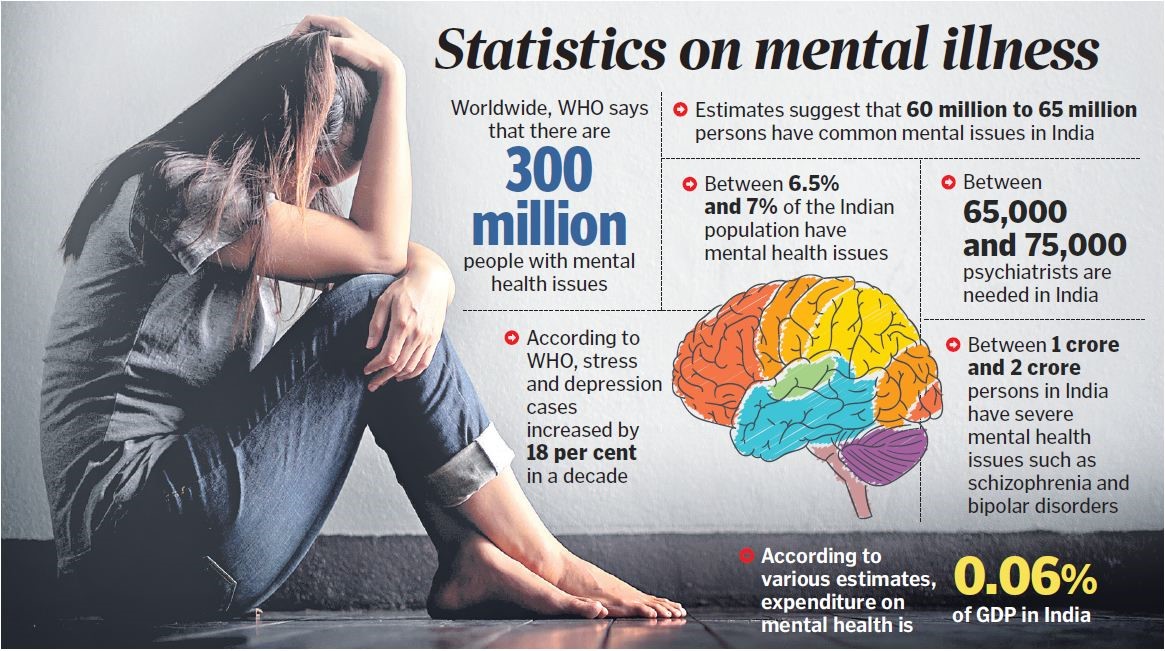

The COVID-19 pandemic significantly impacted mental health worldwide, and India was no exception. The pandemic led to increased stress, anxiety, depression, and other mental health issues across various segments of the population. Here are some key ways India has been affected by mental health illnesses post-pandemic:
- Increased Prevalence of Mental Health Issues:
- Anxiety and Depression: There has been a noticeable increase in cases of anxiety and depression. The uncertainty of the pandemic, fear of illness, financial instability, and social isolation contributed to heightened stress levels.
- Post-Traumatic Stress Disorder (PTSD): Many individuals experienced trauma due to the loss of loved ones, severe illness, or witnessing the struggles of others, leading to symptoms of PTSD.
- Impact on Different Demographics:
- Healthcare Workers: Frontline workers faced immense pressure and stress, leading to burnout and mental health challenges. The continuous exposure to the virus, long working hours, and emotional toll of patient care were significant stressors.
- Children and Adolescents: Disruptions in education, lack of social interaction, and changes in daily routines affected the mental well-being of children and adolescents. Many experienced increased anxiety, irritability, and behavioral issues.
- Elderly Population: Older adults faced isolation due to social distancing measures, leading to feelings of loneliness and depression. Concerns about vulnerability to the virus further exacerbated their anxiety.
- Social and Economic Factors:
- Unemployment and Financial Stress: The pandemic led to job losses and economic instability, causing significant stress and anxiety about financial security and future prospects.
- Domestic Violence: There was a reported increase in domestic violence cases during the lockdowns, affecting the mental health of victims and families.
- Stigma and Lack of Awareness:
- Mental health stigma remains a challenge in India, preventing many from seeking help. Despite increased awareness, cultural and societal barriers often discourage open discussions about mental health issues.
- Access to Mental Health Services:
- The demand for mental health services increased during the pandemic, but access remained limited due to a shortage of mental health professionals, especially in rural areas. Telemedicine and online counseling services grew, but access to technology was a barrier for some.
- Government and Community Response:
- The Indian government and various NGOs launched initiatives to address mental health challenges, including helplines, awareness campaigns, and online resources. However, the scale of the problem requires sustained efforts and investment in mental health infrastructure.
- Long-term Implications:
- The long-term mental health impact of the pandemic is still unfolding. Ongoing efforts to integrate mental health into primary healthcare, reduce stigma, and improve access to services are crucial for addressing these challenges.
Overall, the COVID-19 pandemic highlighted the urgent need to prioritize mental health in India. While progress has been made in raising awareness and expanding services, continued efforts are essential to support those affected and build resilience in the face of future challenges.